Published 16 Apr 2026
What is an AI Playbook? And Why It's Not a Dashboard, a Report, or a Chatbot
Playbooks

Published 16 Apr 2026
An AI Playbook is a structured, evidence-based business briefing generated from your live data. It progresses through three analytical layers: what happened in your business, why it happened, and what to do about it. Each Playbook includes an executive summary, a narrative analysis, supporting visualizations, and prioritized recommended actions.
That definition matters because the term gets misused. Playbooks are not dashboards with better formatting. They are not automated reports. They are not chatbot responses packaged in a document. They are a fundamentally different analytical output, and the difference is structural.
The analytics industry has given businesses three types of output over the past two decades. Dashboards that visualize. Reports that document. And more recently, AI chatbots and copilots that answer individual questions.
Each one is useful. None of them finish the job.
When a metric moves on a dashboard, someone has to figure out why. When a report lands, someone has to interpret it and decide what it means for the business. When a copilot answers a question, someone has to judge whether the answer is complete, accurate, and actionable enough to share with leadership.
The interpretation, investigation, and alignment step always falls on people. Every time. That is the gap. Not a data gap. Not a visibility gap. A decision gap. The distance between seeing something in your data and knowing what to do about it.
That gap is what an AI Playbook is designed to close.
Before defining what a Playbook does, it helps to be precise about what it is not. The category is new enough that the boundaries matter.
Dashboards organize data into charts. They excel at visibility. You can filter, drill down, explore, and monitor KPIs in real time. For data exploration, they remain the best tool available.
But a dashboard never tells you why revenue dropped last quarter. It never explains which three factors drove the margin compression. It never recommends which supplier contracts to renegotiate or which accounts to prioritize for retention. That interpretation step, the part that actually drives a decision, falls on your team every time someone opens a chart and asks "so what does this mean?"
A Playbook arrives with the interpretation already done. The chart is there, but so is the explanation, the investigation, and the recommended response.
Why dashboards are no longer enough for modern decision making
Reports document what happened. They are assembled manually by analysts who pull data from multiple systems, clean it, format it, add commentary, and deliver a structured document to leadership. The process takes days. Sometimes weeks.
By the time the report is final, the numbers have moved. The context has shifted. The window for action may have narrowed. And the cycle starts again next month with the same manual effort.
A Playbook is generated in minutes from live data. It includes the narrative, the supporting evidence, and the recommended actions. It does not require an analyst to assemble it, a manager to review the formatting, or a revision cycle before it reaches the people who need to act. The analysis arrives ready.
The alternative to business reporting
Copilots and AI assistants respond to individual prompts with unstructured answers. You ask a question, you get a response. Sometimes the response is useful. Sometimes it is vague. Sometimes it is confidently wrong.
More importantly, a copilot response is a single answer to a single question. It has no analytical framework. It does not progress from observation to explanation to action. It does not produce a document that leadership can review, challenge, and act on. It produces a chat message.
A Playbook is a complete analytical document built around a specific business problem. It follows a defined structure. It delivers evidence, not opinion. And it arrives with recommended actions that are specific, quantified, and tied directly to the data.
The difference is not the technology. It is the output. A chatbot gives you an answer. A Playbook gives you a decision.
Every AI Playbook follows the same three-layer framework. This structure is what makes it a Playbook rather than just another analytical output.
The first layer identifies what changed. Not every metric that moved, but the signals that matter. An executive summary captures the key finding in 3 to 4 sentences. Supporting data contextualizes the signal: how far it deviated from target, which segments are affected, and how the current state compares to the prior period.
This is not a data dump. It is a prioritized, structured identification of the business signal that warrants attention.
The second layer investigates the cause. Root cause analysis traces the signal to its operational drivers across your connected business systems. If gross margin declined, the Playbook identifies whether the cause is supplier cost increases, product mix shift, pricing erosion, or a combination. If pipeline coverage dropped, it identifies which segments, stages, or rep behaviors are driving the shortfall.
This is the layer that typically takes analysts days to produce. The investigation that happens after the dashboard shows a number moving. In a Playbook, it arrives automatically, with evidence.
The third layer recommends action. Each recommendation is specific, quantified, and ready to execute. Not "consider reviewing supplier contracts." Instead: "Renegotiate supplier contracts in Western Region before Q3 renewal window. Current cost ratio 0.68 against 0.54 benchmark."
The recommendations are prioritized. The first action on the list is the highest-impact move. Leadership can review the Playbook and make a decision without scheduling another meeting to figure out what the data means.
A Playbook arrives as a structured document. At the top, an executive summary covering the key finding in plain language. Below that, a narrative analysis explaining the underlying drivers. Supporting charts and tables visualize the evidence. At the bottom, a numbered list of recommended actions.
The format is consistent across every Playbook. Whether you are analyzing margin compression, supply chain risk, pipeline conversion, or customer churn, the structure is the same: What, Why, What Next. That consistency is what makes Playbooks usable at scale. Leadership teams learn to read them quickly because the format never changes. Only the content does.
eyko generates Playbooks from 200+ pre-built Ideas across five business domains: Customer, Supply Chain, Sales, Marketing, and Financials. You can also generate a Playbook from any plain language prompt. Type the question. Get the analysis.
The shift from dashboards to Decision Intelligence is not a technology trend. It is a response to a structural problem that has existed for two decades.
Every organization has dashboards. Most have invested heavily in BI tools, data warehouses, and reporting layers. The data has never been more visible. And yet, when something changes in the business, the same cycle repeats. Someone notices a number. They open a spreadsheet. They schedule a meeting. They ask an analyst. They wait.
That cycle was tolerable when business moved slowly. It is not tolerable in 2026. Tariff schedules shift overnight. Supply chains reconfigure in weeks. Customer sentiment changes between quarterly reviews. The pace of business has accelerated, but the pace of business decisions has not.
AI has made it possible to generate the investigation, the explanation, and the recommendation automatically. Not a summary. Not a chat response. A structured, evidence-based briefing that arrives ready for executive review.
That is what an AI Playbook is. Not another way to see your data. A way to act on it.
What is Decision Intelligence? The missing layer between your data and your decisions
eyko Beats generates AI Playbooks from your business systems. Connect your data, ask a question, and get a structured Playbook in minutes. Most teams run their first Playbook within 24 hours.
Book a demo and see what Playbooks can do with your data.
New to the category? Learn what decision intelligence is and why it changes how teams act on data.

Vice President, Product Marketing
16 Apr 2026
Mark Hudson is VP of Product Marketing at eyko, where he leads positioning, content, and go-to-market execution for eyko Beats and the Decision Intelligence category. He founded and successfully exited two analytics companies, Antivia (acquired by insightsoftware) and Blue Edge Software (acquired by SAP BusinessObjects). His focus is helping decision-makers move past dashboards and reports to deliver action-based outcomes that drive better decisions.
A dashboard visualizes data in charts and tables. An AI Playbook delivers a structured briefing that explains what happened, investigates why, and recommends what to do next. Dashboards require interpretation. Playbooks arrive with the interpretation done.
An AI copilot responds to individual questions with unstructured answers. An AI Playbook delivers a complete analytical document with an executive summary, root cause analysis, and prioritized recommended actions. A copilot gives you an answer. A Playbook gives you a decision.
Playbooks work across finance, supply chain, sales, marketing, and customer operations. Common use cases include margin analysis, cash flow risk, pipeline review, churn detection, demand forecasting, and supplier risk assessment. eyko provides 200+ pre-built Ideas as starting points.
Minutes. Connect your business systems, type a question or select a pre-built Idea, and eyko Beats generates a complete Playbook from your live data. There is no report building, no analyst queue, and no formatting step.
No. Playbooks are generated from plain language prompts. Type a business question the way you would ask a colleague. eyko Beats handles the data connection, analysis, and structured output.
Join the enterprises replacing weeks of manual analysis with a single prompt. See what eyko Playbooks can do with your data.
The latest industry news, interviews, technologies, and resources.

You have more dashboards than ever. And yet, when it actually matters, someone still opens a spreadsheet. Decision Intelligence exists to close the gap between seeing data and knowing what to do about it.
Read post
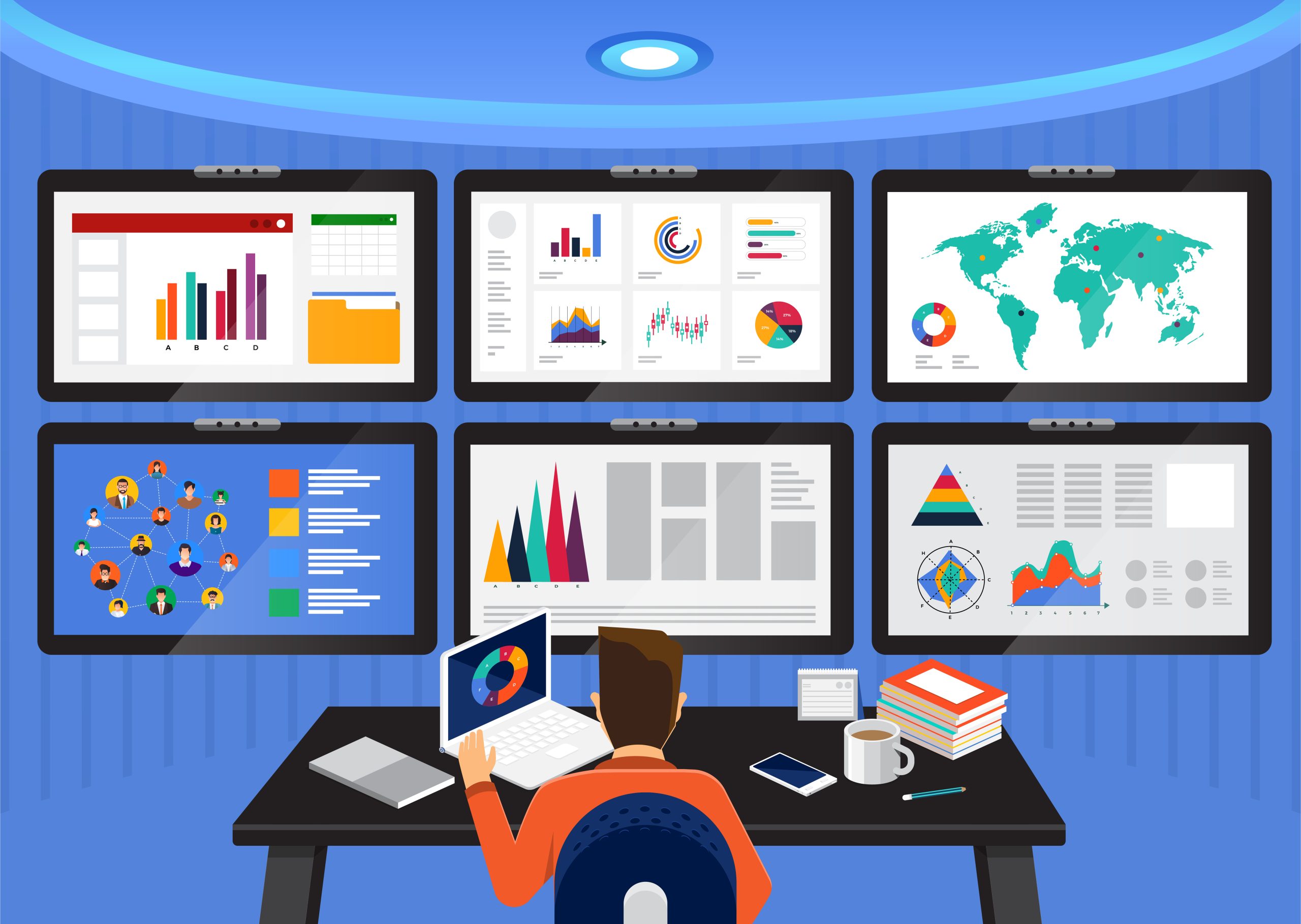
Traditional dashboards only show what happened historically without providing context or recommended actions. Playbooks and autonomous reporting are the next evolution.
Read post